
Aquatic Therapy
Rehabilitation in your community
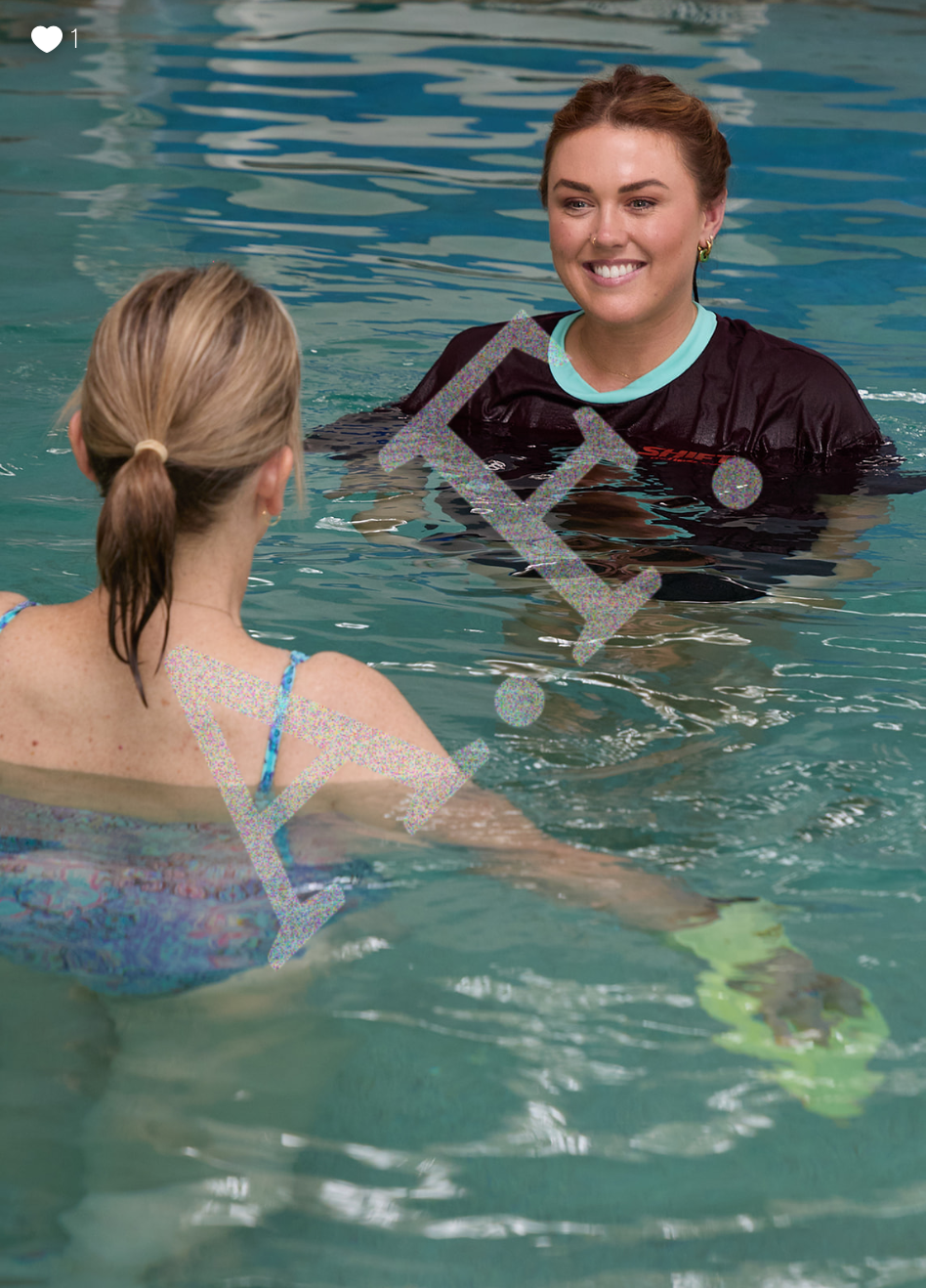
We believe rehabilitation should be accessible, practical and connected to everyday life. That's why SHIFT accesses local, accessible community pools to deliver aquatic therapy in familiar community settings.
Sessions are individualised and guided by your clinical needs, goals and abilities. Our physiotherapy and exercise physiology team will work with you to determine whether aquatic therapy is appropriate and how it can complement your broader rehabilitation program.
We aim to make every session meaningful, helping you build on your strengths, challenge yourself and celebrate progress along the way.
Get in touch to find out more about aquatic therapy with SHIFT Rehab Co and how we can help you move towards what matters.
At SHIFT Rehab Co, we bring rehabilitation into the water by accessing local, accessible community pools to help you move, build strength and work towards your goals in a supportive environment.
Aquatic therapy uses the properties of water to make movement more manageable, provide natural resistance and create opportunities to practise skills that can be challenging on land.
Whether you're working towards improving your mobility, building strength, developing balance or maintaining your independence, our team will tailor sessions to your abilities and goals.
How aquatic therapy can help
Mobility and movement: Practise movements in water, where buoyancy can help reduce the effects of gravity.
Strength and endurance: Use the natural resistance of water to build strength and improve physical capacity.
Balance and coordination: Develop balance, body awareness and movement control in a supportive environment.
Walking and functional movement: Practise movement patterns and functional skills relevant to everyday life.
Neurological rehabilitation: Support people living with conditions such as spinal cord injury, acquired brain injury, Parkinson’s disease and multiple sclerosis.
Movement confidence: Explore different ways to move and exercise when land-based activities are more challenging.
Maintaining independence: Work towards the physical goals that support your daily activities and participation in the community.